Police in Ethiopia have arrested a man accused of being at the centre of a multi-million-dollar international human trafficking ring that since 2018 has lured thousands of people to Libya, where they hoped to travel on to Europe.
Yetbarek Dawit is alleged to have operated five detention warehouses in Libya, torturing migrants there to try and force their relatives to send extra money.
He was detained along with nine of his alleged accomplices in northern town of Shire, according to police. They are yet to be charged in court.
Police say testimonies collected so far suggest the network has been involved in the deaths of more than 100 people and the sexual abuse of more than 50 women.
The arrests were the result of a complex and cross-border investigation, the police said, involving an organisation called the Regional Operational Centre (Rock) - set up to tackle smuggling networks in East Africa and funded by the European Union.
Warning: This story contains details some may find distressing.
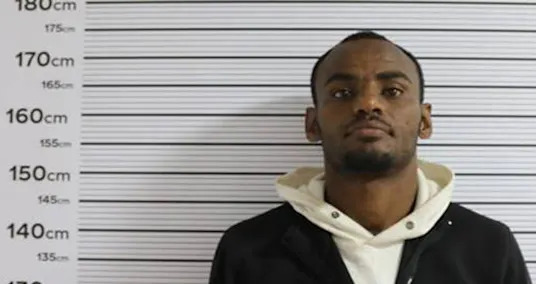
Photos of suspects - seven men and three women - taken after their arrest in Shire, which is in the northern region of Tigray and borders Eritrea and Sudan, were posted on the Ethiopian Federal Police's Facebook page.
The traffickers are alleged to have transported more than 3,000 mainly young people from Djibouti, Eritrea, Ethiopia, Kenya, Somalia and Sudan to Libya using various routes.
According to the police, Yetbarek is wanted internationally and uses a variety of aliases:
"Adhanom" in Sudan
"Ahmed" in Djibouti and Somalia
"Munir" in Kenya
"Kibrom" in Sweden and other European countries.
Armed with these names, investigators had been able to use advanced technology to track down Yetbarek, the police said.
The bank accounts of Yetbarek and his accomplices had been frozen and the properties belonging to the group confiscated, it added.
Testimonies gathered from more than 100 alleged victims and their families living in Ethiopia, Libya, the Netherlands, Switzerland, the UK and Canada had also aided the investigation, the police said.
They told of the gruesome experience of those held in the warehouses in Libya - allegedly forced to contact their families to send more money to the traffickers.
Those who could not pay were allegedly given food only once a day and were subjected to extreme torture.
This allegedly included beatings with rubber, sticks and electric wires, being chained by their hands and feet, and having melted plastic dripped on to their bodies.
Women were allegedly subjected to sexual violence, also resulting in severe physical and psychological injuries.
The group is believed to have generated more than $19m (£14m) through these criminal activities, according to the police.
Following their arrest in Tigray, the 10 suspects were taken on Monday to the capital, Addis Ababa.
You may also be interested in:

Go to BBCAfrica.com for more news from the African continent.
Follow us on Twitter @BBCAfrica, on Facebook at BBC Africa or on Instagram at bbcafrica
BBC Africa podcasts
LATEST POSTS
- 1
 Top Frozen yogurt Flavor: Cast Your Vote!
- 2Canada Awards C$1.5 Billion Defense Contracts to L3Harris, Airbus
- 3Israeli media reports Iran attacking greater Tel Aviv region
- 4The most effective method to Use an Internet Showcasing Degree for Advanced Predominance
- 5Let them eat (Taylor Swift) cake: The baker turning A-listers into life-size desserts



- Astronauts head home early after medical issue
- Figure out How to Explore the Infotainment Framework in the Slam 1500.
- Flourishing in a Remote Workplace: Individual Techniques
- Africa's energy giants eye long-term gains on Iran war disruption
- New electric car registrations rise sharply in Germany in March
- Quandoo to shut restaurant booking platform by end of 2026
- Police break up illegal chicken slaughter in Germany
- ONE returns to Red Sea with new service
- Japan prepares to restart world's biggest nuclear plant, 15 years after Fukushima