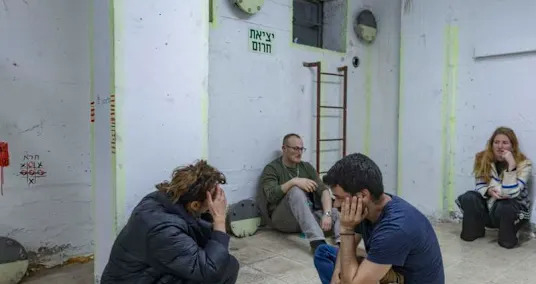
The data reflects the feelings of the young people participating in the survey, but paints a worrying picture that is mirrored in Aluma’s ongoing work in the field.
Amid the ongoing war and the upheaval it creates in everyday life, the Aluma organization, which works to expand mobility among young people in Israel and to provide support at life's crossroads of service, education, and employment, conducted an internal survey among 237 young men and women it supports. The results point to a severe and deepening crisis beneath the radar.
The data reflects the feelings of the young people participating in the survey, but paints a worrying picture that is mirrored in Aluma’s ongoing work in the field.
According to the data and Aluma’s work, many young people feel that the government does not see them and does not provide a sufficient response to their needs.
Only 3% of respondents felt that the state cares about the future of young people in Israel, whereas 74% stated that they feel that the state does not see them and does not care about their future at all, or only to a small extent.
The main impact is in the field of education, according to Aluma’s findings, with 64% of young people reporting damage or freezing of their academic plans due to the war, and 45% listed education as their primary concern.

About a quarter of those surveyed stated that they are especially worried about their economic situation.
Growing instability, diminishing optimism
At the same time, the feeling of instability is growing. A majority of the young people surveyed, 57%, reported uncertainty as a description of their feelings about their future in Israel. Only 30% felt optimistic about their future in Israel.
The potential consequences of the situations are already visible, with about 30% of young people surveyed having thought about or considered leaving Israel for an extended period, with 9% of them seriously considering or planning to leave.
Dr. Tami Halamish Eisenman, CEO of Aluma, said that "the young people we meet every day are at the very turning points of their lives - after military service, at the beginning of their studies, on the path to independence. The war caught them there, and we see the impact.”
“As in any crisis, they are the first to be affected and among the last to be talked about. This survey does not surprise us; it confirms what we hear from the field,” Eisenman said.
"The question is not whether there is a problem, but when we start addressing it. Without focused attention, we may find ourselves in a few years with much deeper gaps."
LATEST POSTS
- 1
 Mexican Woman Accused of Assaulting Partner With Belt After He Refused Sex, Police Say
 - 2'Israel has the right to continue its attacks,' Lebanese Foreign Minister announces
- 3Iran executes two men who tried storming military facility during January protest crackdown
- 4Joshua Made Last-Second Seat Change That Saved His Life
- 5'We need everyone,' wounded reservist urges Knesset panel to advance haredi draft law




- It's official: NASA's Artemis 2 moon mission will break humanity's all-time distance record
- Whale stranded off Germany for days found stuck again
- Significant Elements to Consider Prior to Applying for a Mastercard: 6 Vital Contemplations
- Which Instax Camera Would it be a good idea for you to Purchase?
- Remain Cool and Solid: Top Summer Food sources for 2024
- Most loved Caf\u00e9 Chain: Where Do You Get Your Caffeine Fix
- Extremely Rare Snub-Nosed Monkey Was Just Born for the First Time Outside of Asia
- UAE recalls some Nestle infant formula products, Qatar warns consumers
- Share your pick for the riding area that characterizes your surf undertakings!